Tuesday, June 14, 2011

Boozy Clergy Crispy Tofu with Mashed Potatoes and Broccoli


[First off, props to my friend Andrew for advising the use of Cooling Filter 82 (5-15%) in Photoshop. Thank god someone knows what he's doing.]

This post is a synthesis of the previous two. Unifying the alcoholic and religious components, we overcome yet another facet of clerical asceticism. On June 14, 1789, Rev. Elijah Craig, "a pioneering Baptist preacher" (says Wikipedia, as always) born in Virginia (just like your faithful blogger — holla!)... hold on. Wikipedia claims there's a precise date for Rev. Craig's innovation of aging corn distillate in charred oak casks. Well, whatever, you've got him to thank for modern corn whiskey. Rev. Craig was arrested at least once for preaching without a license. That's my kind of preacher! From his eulogy in The Kentucky Gazette: "His preaching was of the most solemn style; his appearance as of a man who had just come from the dead..." Again, my kind of preacher!

Tonight's meal is courtesy of Vegan Dad and Isa Chandra Moskowitz. Golden Crispy Tofu! Savory Mushroom Gravy! Mashed potatoes (6 Yukon golds boiled with a few cloves of garlic, mashed with some vegan butter and salt and pepper)! Steamed broccoli! Probably more trouble than it's worth!

Tiny Mix Tapes published the latest installment of my comic, A Thousand K.s.

Monday, June 13, 2011

Martin Luther's Boner Hummus


Alright, so I didn't make dinner tonight. We had leftover casserole. I did make some professional-looking fries, though. No pictures, sorry. What you're looking at up above is my snack: a decent hummus, if a bit runny. Includes chickpeas, tahini, olive oil, lemon juice: duh; parsley: surprise; garlic powder: because I forgot the garlic cloves — total boner! Which brings us to the title of today's post, named after the 486th anniversary of Martin Luther's marriage to Katharina von Bora. The Catholic Church decreed chastity for all priests and nuns, but my man Martin was having none of it (see: boner). And who could refuse a woman with a name like "Katharina von Bora?" Get real, Catholic Church! (I'm pretty sure that was one of the 95 Theses.)

Why are there so many colons in this post? (Don't answer that.)

Tiny Mix Tapes published my review of Queen of the Sun: What are the bees telling us? Click to find out what I'm telling the bees.

Sunday, June 12, 2011

Gregory Peck's Death Casserole


A ton of really heavy events have occurred on June 12. I couldn't decide on one, so I went with Gregory Peck's date of death in 2003. Not that a death isn't significant, this one just isn't historically important. (And he died in his sleep at the age of 87, the lucky pecker.)

And this casserole is handsome. It's a real Gregory Peck sort of casserole, if you know what I mean. My dad whipped it up out of thin air (and ingredients), proving that you can disdain vegan cooking and still put a self-styled vegan food enthusiast like me to shame in the kitchen. This is gourmet, even if my dad did think it would be better with some parmesan cheese.

No recipe — it's a secret. I can list the ingredients, though: tofu sausage (by some local place that's been around for 40 years, apparently), eggplant, baby asparagus, spinach, button mushrooms, black olives, tomato sauce, ground black pepper, oregano, thyme, salt.

I'm making dinner tomorrow!

Saturday, June 11, 2011

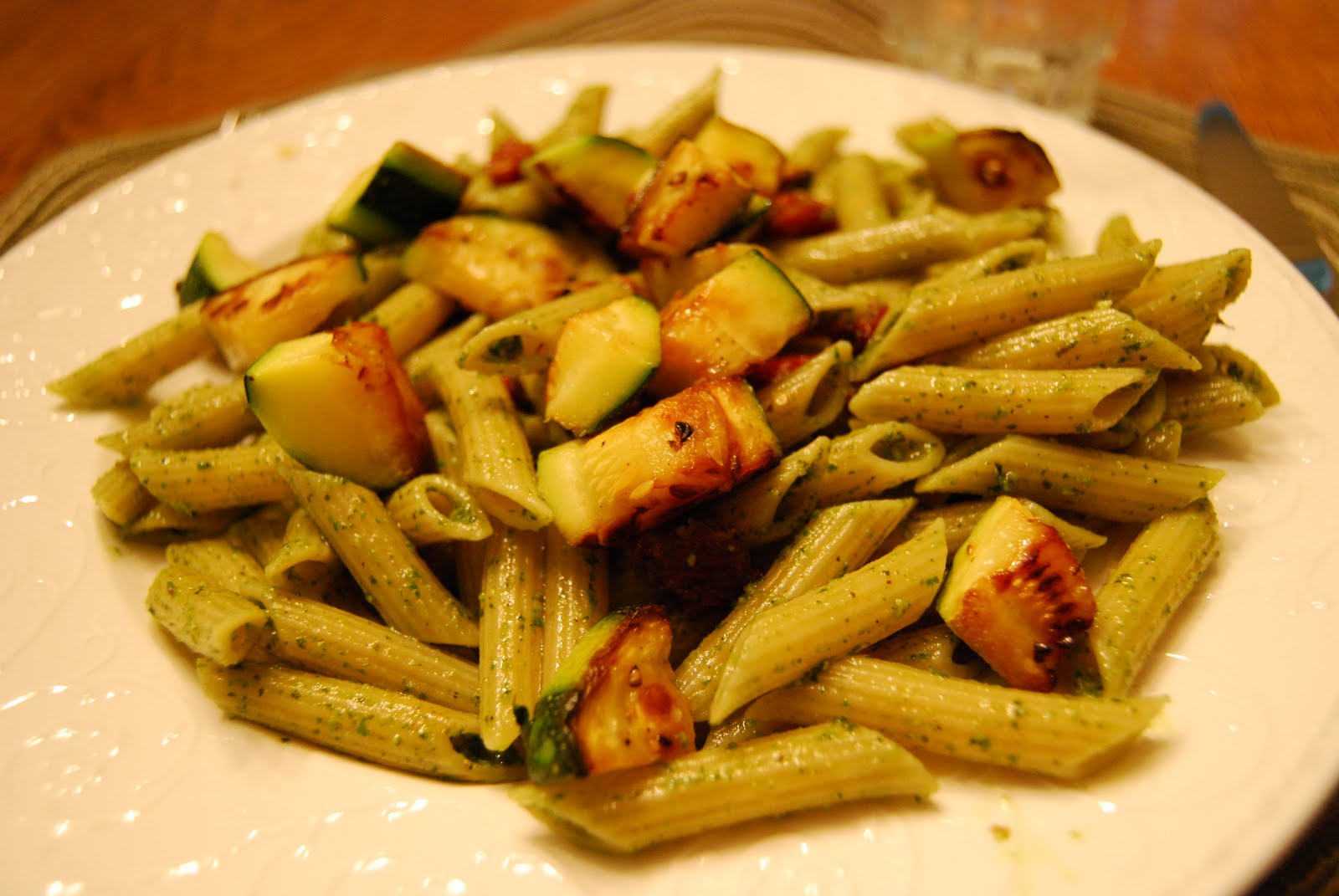
Alcoholics Anonymous Penne with Pesto


AA was founded 76 years ago yesterday (which is when we ate this) by Dr. Bob Smith and Bill Wilson in Akron, OH. Two thumbs up for mutual aid groups. Everything I know about AA I learned from Infinite Jest. What a weird person I am.

Tonight Mom and Dad and I went to Himalayan Fusion for dinner. It was good. I'm not going to post a recipe for the past because I wasn't watching and because I think my mom just cooked some penne, sauteed some zucchini, and made basil pesto in a food processor with oil, lemon, salt, and pine nuts.


Grandma pointed out yesterday that it was Saul Bellow's birthday. I read Humboldt's Gift years ago. Didn't really like it. Anyway, Grandma wrote me this lovely ditty:
Grazie mille.
When the moon hits your eye 
Like penne or pizza pie 
That's amore. 
But a gauche gastronomical slight 
On old Saul Bellow is a serious fright.
Thus we historians must ask you why 
When you know he was a respected guy 
Not even breakfast?
When I asked her what she thought Saul might like, she replied with this:
While U Do the Hokey Pokey
U breakfast on 'Shrooms Smokey
With a Diet Cherry Cokey
That's what it's all about
That's the teddy bears' picnic
Now I know where my talent comes from.

Thursday, June 9, 2011

Dad Dinner: Death of Charles Dickens Tacos


Charles Dickens died 141 years ago to the day. He wanted a no-frills burial at Rochester Cathedral but was instead interred at Westminster Abbey. Oops. Confession: I have never read anything Charles Dickens wrote. Oops.

Tonight's dinner was prepared by my father, but I lurked in the kitchen so I know what went down. My mom likes hard shell tacos, and the kind we used have flattened bottoms. "Stand 'em up" tacos, or something. Pretty neat, actually, and they tend to collapse less frequently and sloppily than their round-bottomed cousins.

makes approx. 8-10 tacos

INGREDIENTS:
<1 c. short-grain brown rice
2 zucchini, sliced
1/2 red bell pepper, diced
1/2 large jalapeño, diced
1 15-oz. can black beans, drained and rinsed
1 14.5-oz. can diced fire-roasted tomatoes with garlic
4 green onions, chopped (used these because they were getting old)
2 cloves garlic, minced
cumin
chili powder
chipotle chili pepper powder
dried parsely
oregano
celery salt
ground black pepper

DIRECTIONS:
1. Put on the rice.
2. Sauté the onions with oil in a pot over medium-high heat. After a few minutes, add the garlic, can of tomatoes, black beans, garlic, and seasoning (some of everything, with tons of chili powder). Reduce heat to low and let simmer until the rice is done.
3. Sauté the zucchini with seasoning in oil in a pan over medium-high heat for seven minutes.
4. Pop the taco shells in the oven (325F for several minutes).
5. Assemble the tacos. Besides the rice, bean and tomato stuff, and zucchini, there's raw red pepper and jalapeño, as well as lettuce or other leafy greens and salsa. Some corn would be nice, too, although we didn't have any. And mushrooms! Next time.

After I finished filling my first stand-up taco, it promptly fell over. Poor thing couldn't hold its weight.


Wednesday, June 8, 2011

Mom Meal: Legalized Homosexuality in New South Wales Lentil Salad and Couscous


New South Wales, Australia didn't legalize homosexuality until 1984. Talk about feet-dragging. Oh, wait. Same-sex sexuality wasn't legal throughout the US until 2003. Talk about head-hanging.

Went on a bike ride with my dad tonight. It was way too hot (over 90F) and I was too slow. We pulled off the back of the group early. Mom had a beautiful summery meal waiting for us at home. Lentil salad (olives, grape tomatoes, chickpeas, olive oil, red wine vinegar) and couscous (lemon zest, sun-dried tomatoes). And there was mesclun mix and bread, too! It was all delicious; the recipes "look like they're from Gourmet" (i.e., Mom has unannotated photocopies). Sniff it out or approximate. Here's a closeup to help.

Tuesday, June 7, 2011

Anarchy is Not Enough


I recently picked up The Coming Insurrection at Barnes & Noble. If you buy it on Amazon, you only have to pay $8.21, which is a savings of $4.74 (37%)! However you get a hold of it, remember: "No part of this book may be reproduced, stored in a retrieval system, or transmitted by any means, electronic, mechanical, photocopying, recording, or otherwise, without prior permission of the publisher." This is a review, and I intend to reproduce parts of the book. The MIT Press can get bent.

If you can't tell, I'm not impressed. In fact, I'm fed up with these anarchist calls to action. I want to be an anarchist, I really do, but this is not (good) enough. As a critique, Insurrection is inconsistent. As a program for action, it's downright regressive.

On economics: "All things considered, it's not the crisis that depresses us, it's growth" (63). Fine. Capitalism is an assemblage of metastatic machines (a teleology without telos, I've characterized it elsewhere). But then the Invisible Committee (IC) goes on to write, "[N]egative growth would preserve [economics] as a morality" (68). So they don't want growth, but they also don't want negative growth. They want pure destruction. They want stasis. They want death. "[W]e dream of an age that is equal to our passions," they write. Their passions are affirmative, but affirmations of what, exactly? I suspect the age which is equal to the intensity of affect IC valorize is precisely a dream, a hallucination. It's nothing short of the Apocalypse (capitalized to emphasize religiosity). The IC recognize that "[t]o be disappointed, one must have hoped for something" (45). Prepare to be disappointed.

The IC want us to believe that while "[n]othing appears less likely than an insurrection, [...] nothing is more necessary" (96). I wish that were the case. But it is precisely insurrection which is not necessary. The IC should want to advocate for the insurrection as a way out (and they do in fact characterize capitalism as a system with no exits), but instead they call it necessary, which makes it the means and end of freedom. Remember what Kafka writes in "A Report to an Academy": "[A]ll too often men are betrayed by the word freedom. And as freedom is counted among the most sublime feelings, so the corresponding disillusionment can be also sublime." Consider me disillusioned.

The IC conceive of philosophy as parallel to the police, a technique of social destabilization which undermines commitment and universal truth in favor of a radical relativism which supports the metropolis. This is how they can get away with writing, "There's nothing more to say, everything has to be destroyed" (86). Of course, they do have more to say and there is always more to say. And since they're going to say more, they should have spent more time reading the philosophers they disparage (although Insurrection's philosophical influences are fairly obvious). Take the IC's criticism of those they call "post autistic economists," that they are "ultimately doing what religions have always done: providing [sic] explanations" (65). The IC is sick of analysis because they think it produces only false consciousness, that there's nothing left to explain. But most of Insurrection is analysis — 71 pages of it, in fact. This strain of anarchism is dogmatic, and that's why it's powerful (or poses as though it were). But strength of conviction is dangerous when it suppresses inquiry. (Insurrection is committed to Truth, which is a first indication that they might have a hard time distinguishing themselves from other groups struggling for radical change, like Neo-Nazis.)

The central theme that runs through the various chapters ("Circles," for some reason) is placelessness. The Invisible Committee renounce the nomadism championed by postmodern theories of the network society, a term the IC would rightly call redundant or misleading (society has been replaced by networks). But herein lies the deepest contradiction. Anti-globalization activists know better than anyone how to navigate global flows. After railing against capitalism's erasure of place, the IC reminds its readers that travel is an effective way to foster and sustain communes (which they refuse to recognize are another name for Temporary Autonomous Zones, a significant oversight because the comparison would presuppose the failure of insurrection as a total revolution).

The tension between nostalgia for rootedness and ecstasy in levity comes to a head in Insurrection's meager explication of a definite program for action. The success of the insurrection depends on maintenance of lines of communication, but the insurrection itself is nothing if not a contagious take-down of the network. The best commentary on this problematic is the IC's usage of the word "complicity," which seems to correspond most closely to standard usage of "affinity." Lesson learned: one can be complicit without knowing what "complicity" means, or what complicity means.